
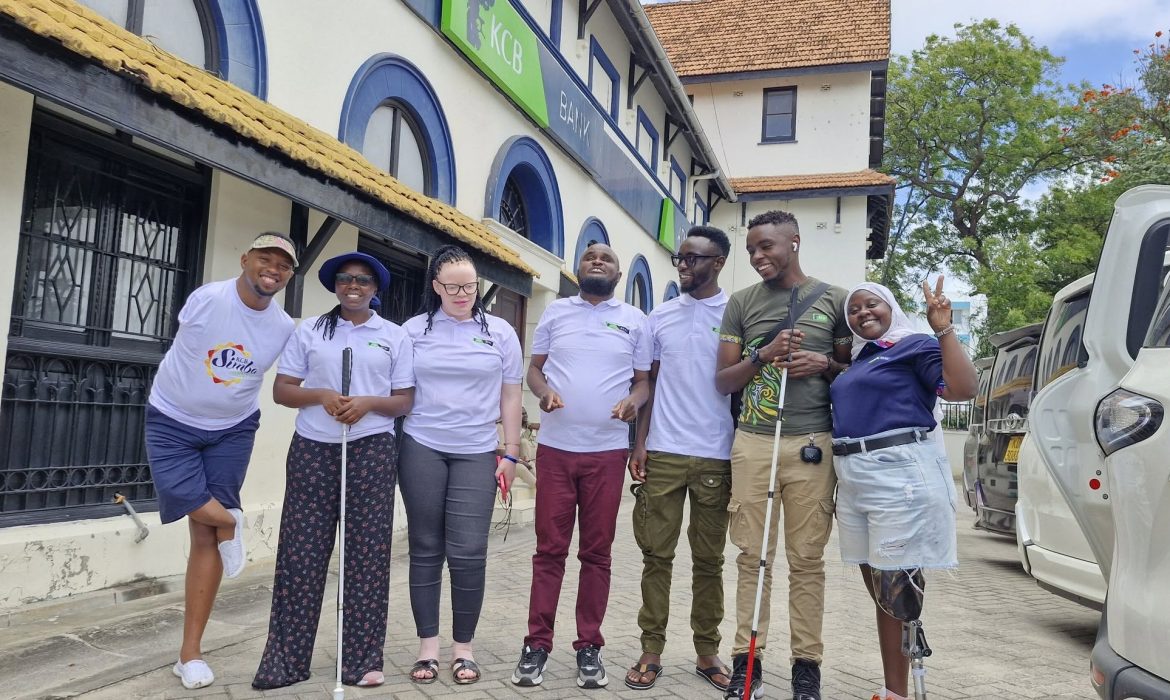
I honestly love the Kenya Beyond Sight campaign by KCB Bank Kenya, RUBiS Energy Kenya and the Kenya Tourism Board. It brings an important question into the open: who gets to enjoy the travel experiences we promote so enthusiastically?
Launched on 17 September 2026, the campaign brought together six creators, J-Supercharge, Denno Music, Sammy Brayo, Nancy Cosy, Chelah Richards and Delvin Obara, for a five-day journey through Eastern and Coastal Kenya. The creators, who have different disabilities, documented the destinations and activities from their own perspectives. Accessible Travel Kenya helped plan the route, transport and experiences around their access needs.
Kenyans are being encouraged to explore Kenya differently while shining a spotlight on unique tourist destinations, cultures and experiences that may often be overlooked.
Through a new campaign, “Kenya Beyond Sight,” KCB Bank in partnership with @RUBiSKenya_ and the @KTBKenya… pic.twitter.com/QprCQVvY4G
— KCB Kenya (@KCBInKenya) September 17, 2026
The campaign invites us to experience Kenya through sound, touch, taste, culture and human connection, as well as sight. But the part that interests me most is its focus on inclusive travel.
A beautiful destination is only part of the journey
Travel marketing usually shows us the best view: a beach, a sunset, a hotel room or a wildlife encounter. Those images can inspire someone to book a trip. They do not tell every traveller whether they can get into the vehicle, access the room, understand the guide, move around the attraction or participate in an activity.
Those details can decide whether the trip is possible at all.
For a wheelchair user, accessibility may begin with suitable transport and continue through entrances, bathrooms and paths. A traveller with a visual impairment may need clear descriptions, orientation and guides who communicate well. Someone who is deaf or hard of hearing may need information in a format they can access. The needs vary, so a venue cannot call itself inclusive simply because it has addressed one of them.
That is why the planning behind Kenya Beyond Sight matters. According to reporting on the campaign, Accessible Travel Kenya designed the itinerary around the creators’ needs and provided accessible transport. The journey included experiences at Malindi Marine Park and Haller Park, with support from tourism and conservation partners. Inclusion had to be considered before the creators arrived, not added to the caption after the photographs were taken.
Let travellers tell their own stories
Another thing I appreciate is that the campaign gives creators with disabilities space to show what travel feels like from their perspective. They are not simply appearing in a campaign image. They are experiencing places, sharing what they enjoy and making visible the details that other travel stories may overlook.
How i found my way Blindly using muscle memory and orientation with my White Cane 🦯 😎 #KenyaBeyondSight pic.twitter.com/hVWrwvExLh
— Julio🦯 (@JSupercharge) September 24, 2026
That changes how a tourism story is told. A snorkelling experience, a meal, a conversation with a guide or a stop along the road can communicate more about access than a broad statement that a destination welcomes everyone.
It also gives travel businesses something specific to listen for. What worked well? Where did a traveller need help? Which part of the journey was difficult to navigate? These are practical questions for hotels, tour operators, attractions and transport providers.
Malindi Marine Park was beautiful 😍.Big thanks to @kcbkenya @kenyawildlifeservice @magicalkenya #KenyaBeyondSight #forpeopleforbetter #magicalkenya #TembeaKenya pic.twitter.com/xE6gNptoye
— Sammy Brayo (@SammyBrayo_Able) September 25, 2026
What Kenya Beyond Sight teaches us about digital marketing
The campaign shows how much stronger a message can be when the people it concerns help tell the story. The creators share their own experiences instead of leaving the brands to speak for them. Their posts can show the joy of a trip and the practical details of access in a way that a campaign slogan cannot.
It also shows why the experience behind the content matters. The partners did more than ask creators to post about inclusive travel. The itinerary, transport and activities were planned with accessibility in mind. For a marketer, that is a reminder to check whether the service people will encounter supports the promise being made online.
There is also a lesson in collaboration. Each partner brought something to the journey, while the creators brought the perspectives that give the story its meaning. Digital platforms help those stories reach people beyond the trip itself. The next step is to listen to the responses and use what the creators reveal to improve travel experiences.
What tourism brands can take from the campaign?
For marketers and communicators, inclusive storytelling begins long before publishing. A few useful questions are:
- Can people take part? Check the full journey, from booking and transport to accommodation and activities. Ask travellers about their needs rather than assuming.
- Can people find reliable information? Describe access features clearly and accurately. A traveller should know what is available before making a booking.
- Can people access the campaign itself? Add captions to videos, write useful image descriptions and make essential details available in text. A campaign about inclusion should be accessible to its audience too.
- Are you listening after the trip? Share what participants say about both the good experiences and the barriers. Use that feedback to improve the service.
Kenya Beyond Sight is a promising example of partners using a creator campaign to open a wider conversation about travel. KCB, RUBiS Energy Kenya and the Kenya Tourism Board have helped bring attention to it; the creators and the team planning their journey make the issue real.
The lasting measure will be what happens next. If tourism businesses use these stories to improve access and give travellers clear information, more people will be able to experience the Kenya we are so proud to promote.


