
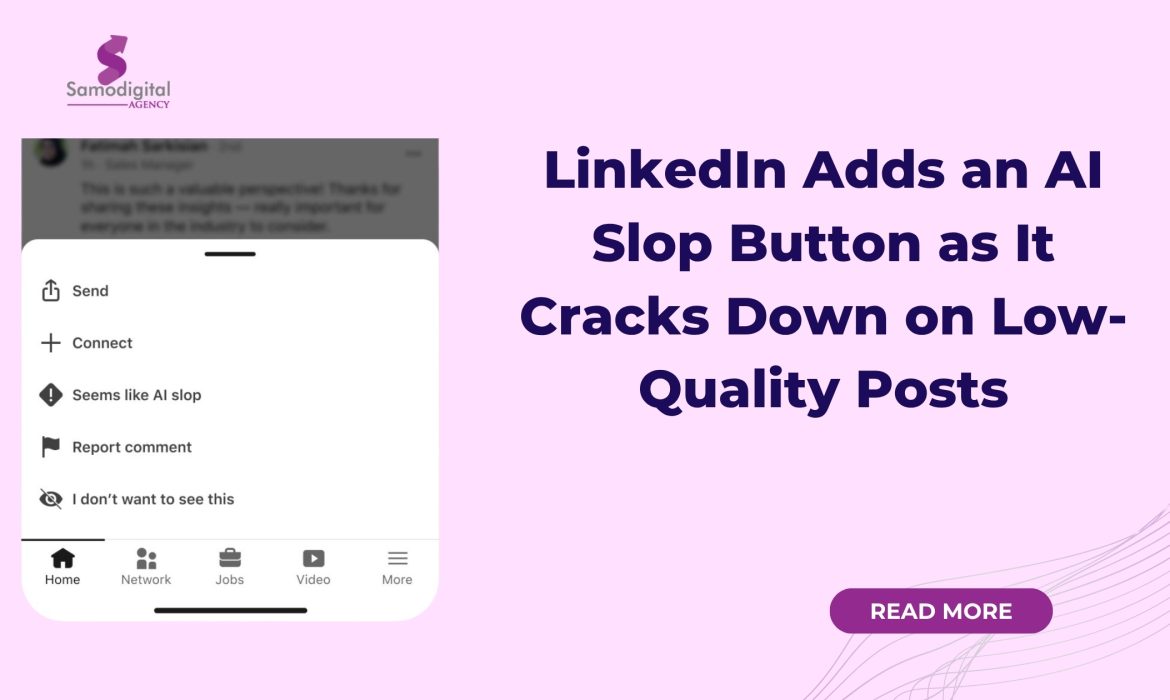
LinkedIn is rolling out a “Seems like AI slop” reporting option that allows members to flag posts and comments they believe feel automated, generic or inauthentic. The LinkedIn AI slop button is part of a wider effort to reduce low-quality content and protect the professional network’s focus on real expertise and human perspectives.
The option appears in the three-dot menu on a post. After a member selects it, LinkedIn hides the post from that person’s feed and uses the feedback as a signal to improve the systems that determine what content should be recommended.
What is AI slop?
“AI slop” generally refers to low-quality content produced or heavily shaped by artificial intelligence. It may be grammatically correct and professionally formatted but still feel empty, repetitive or disconnected from the person publishing it.
The problem is not simply that AI was used.
LinkedIn’s Chief Product Officer, Hari Srinivasan, said the company recognizes that many people use AI to refine their thoughts. The concern is content that lacks an authentic perspective, offers little value or is produced at scale to attract attention and engagement.
This distinction matters. A person can use AI to proofread a post while keeping their experience, argument and voice. However, a polished post can still be considered slop when it repeats familiar phrases without communicating anything useful.
How the LinkedIn AI slop Button will Work
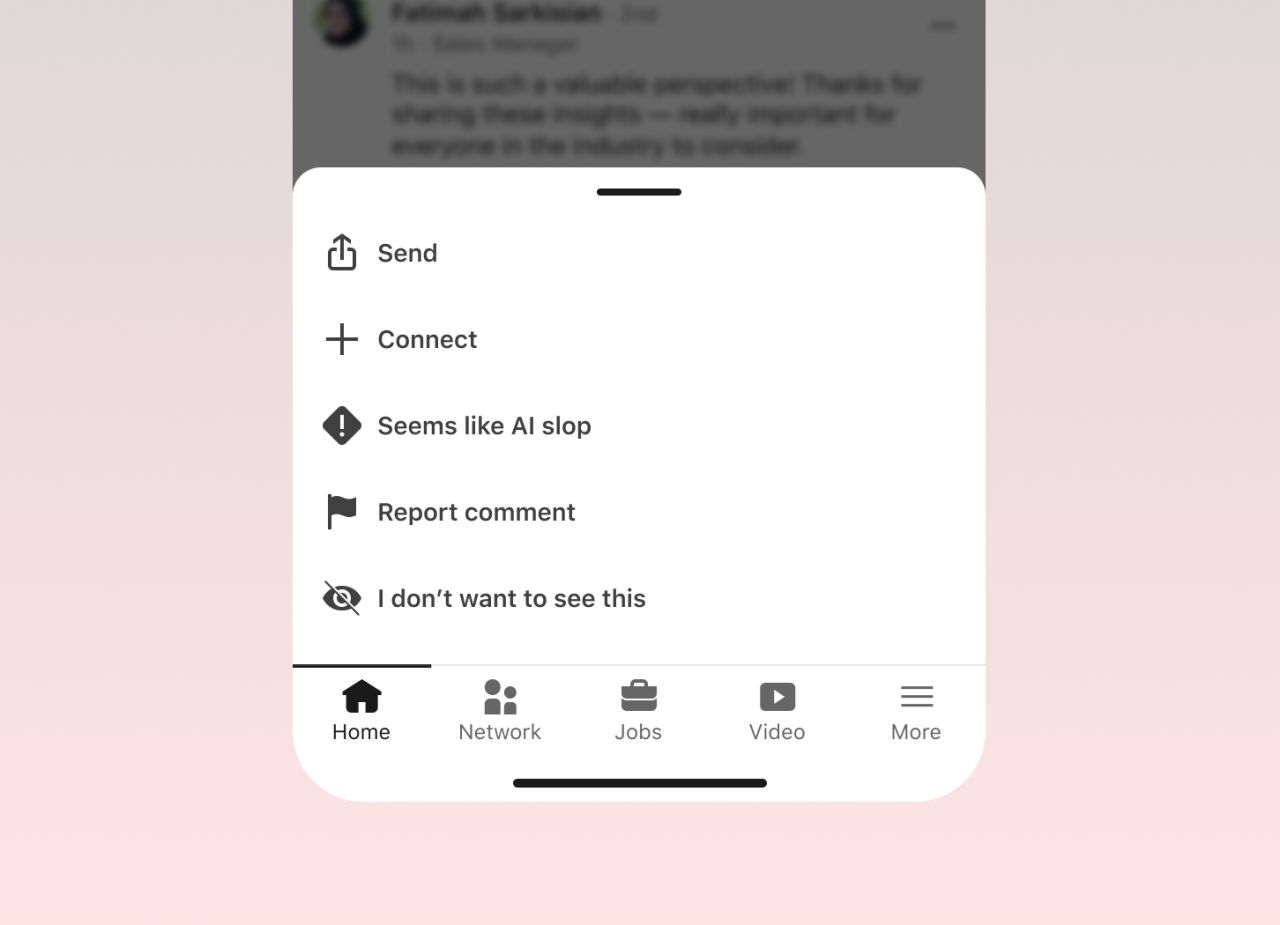
Linkedin seems like AI slop-button
LinkedIn says reports from members will help it tune its models and improve the feed.
The company is also introducing new classifiers designed to identify AI slop and other low-quality posts. This is expected to reduce such content in recommendations, particularly posts published by people outside a member’s network.
The button should therefore be viewed as a feedback tool, not necessarily an automatic penalty.
LinkedIn has not said that one report will cause a post to be removed or immediately reduce its reach. Instead, the reports will provide additional signals that help the platform understand what members consider inauthentic.
LinkedIn is also testing private feedback for creators. A person may see a notice in their analytics dashboard when members feel their post sounds inauthentic or relies too heavily on AI. The feedback will not publicly label the post or identify the members who reported it.
LinkedIn is Changing its own AI writing Tools
LinkedIn is also removing its “enhance your post” feature, which could rewrite a member’s content using AI. It will replace the feature with a proofreading tool that corrects the writing without changing the person’s voice.
This is an important change in direction. LinkedIn is not rejecting AI as a writing assistant. Instead, it is drawing a clearer line between using AI for support and allowing AI to replace personal thinking.
The company is also strengthening its automation defences. LinkedIn says it now catches hundreds of thousands of automated comment attempts every day and has blocked billions of other automation attempts, including large-scale posting, over the past few months.
LinkedIn is also expanding profile and Page verification. Members will be able to block comments from company Pages they no longer want to see.
What Does this Mean for LinkedIn users?
For people who read content on LinkedIn, the update provides a direct way to tell the platform when a post feels mass-produced or offers little value. Over time, this feedback could help LinkedIn reduce generic posts and automated comments in the feed.
For people who publish content, the message is clear: using AI is not automatically the problem, but losing your voice is.
Posts should still contain a real observation, experience, argument or lesson from the person publishing them. AI can help organize ideas, check grammar and improve clarity, but it should not invent expertise or turn every experience into the same predictable thought-leadership post.
There are also possible risks. Members may incorrectly label polished writing as AI-generated. Competitors and critics could also misuse the reporting option against content or viewpoints they dislike.
LinkedIn will therefore need to treat member reports as one signal among several rather than proof that a post is AI slop.
Final Take
The LinkedIn AI slop button is a response to a trust problem, not only a technology problem. When feeds become crowded with automated comments and interchangeable posts, users find it harder to determine whose expertise, experience and opinions are genuine.
The update does not mean people should stop using AI. It means AI should support the writer rather than become the writer.
The strongest LinkedIn content will still come from people who have something specific to say and are willing to sound like themselves.


