
WhatsApp Usernames: What Meta’s Move Means for Privacy, Brands and Digital Marketing
WhatsApp is preparing for one of its biggest identity changes in years.
The platform is introducing usernames, giving users a way to connect without immediately sharing their phone numbers. For a platform that has always been built around mobile numbers, this is not a small product update. It changes how people are found, how businesses receive enquiries, how customers build trust, and how brands protect their identity online.
On June 29, 2026, WhatsApp announced that users can start reserving optional usernames ahead of the full rollout later in the year. The company said usernames are meant to make WhatsApp more private by allowing people to chat without handing over their phone numbers in some new conversations. WhatsApp also said there will be no public username directory and no suggestions, meaning someone will need to know your exact username before contacting you for the first time.
At Samodigital Agency, we see this as more than a WhatsApp feature. It is part of a wider shift in how brands will build direct relationships with customers in a more private, mobile-first and conversation-led digital environment.
What Are WhatsApp Usernames?
WhatsApp usernames will allow users to reserve a unique handle that can be shared instead of a phone number.
This means that instead of giving someone your mobile number immediately, you may be able to share a username such as @yourname or @brandname, depending on availability and WhatsApp’s rules.
The feature is optional. WhatsApp is not removing phone numbers completely. Users will still need a phone number to register an account, and people who already have your phone number may still see it. The privacy benefit mainly applies to new conversations with people or businesses that do not already have your number.
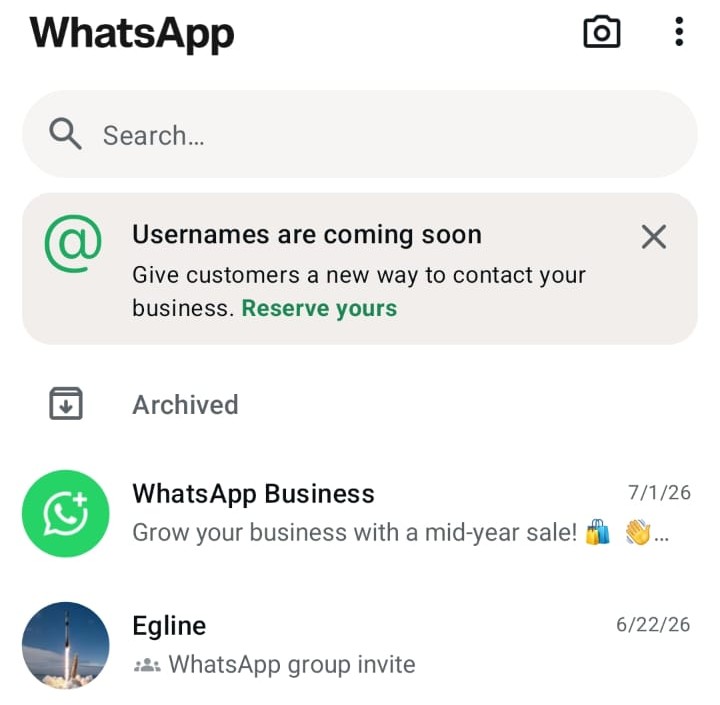
WhatsApp is also introducing an optional username key. This adds another layer of control because a person may need both your username and your key before they can message you. This is meant to reduce unwanted messages, spam and abuse if your username becomes public.
Why Meta Is Introducing WhatsApp Usernames
1. Privacy and Identity Protection
The biggest reason is privacy.
A phone number is not just a contact detail. It is tied to mobile money, banking, family, work, business accounts, two-factor authentication, social media, and many other parts of everyday life. Once someone has your number, they can contact you outside the original reason you connected.
This has always been one of WhatsApp’s weak points. The app offers end-to-end encrypted conversations, but it has not always protected the user’s identity at the point of contact. If you join a group, attend an event, network with new people, or contact a business, sharing your number can feel too personal.
WhatsApp usernames are meant to reduce that exposure. They give users a lighter way to connect without immediately handing over a sensitive personal identifier.
2. More Control for Users
People increasingly want to control how they are found online.
On Instagram, TikTok, X, LinkedIn and Telegram, users are already familiar with social media handles. WhatsApp has remained different because it is built around phone numbers. That has made it feel personal, but also less flexible.
Usernames give WhatsApp a modern identity layer without turning it into a fully public social network. This distinction matters. WhatsApp says there will be no public directory, no username browsing and no suggestions. Someone will need to know your exact username before contacting you for the first time.
That means WhatsApp is not trying to become Instagram. It is adding a private contact option, not a public discovery system.
3. Competition With Other Messaging Platforms
WhatsApp is also responding to what users already experience on other messaging platforms.
Telegram and other messaging apps have offered username-based contact options for years. Users now expect to have some way of connecting without exposing their phone number immediately.
WhatsApp is arriving late to this feature, but its scale makes the update significant. WhatsApp says it has over three billion users, which is one reason username reservation is being opened early to reduce overlap and give people time to claim names that matter to them.
4. Business and Customer Communication
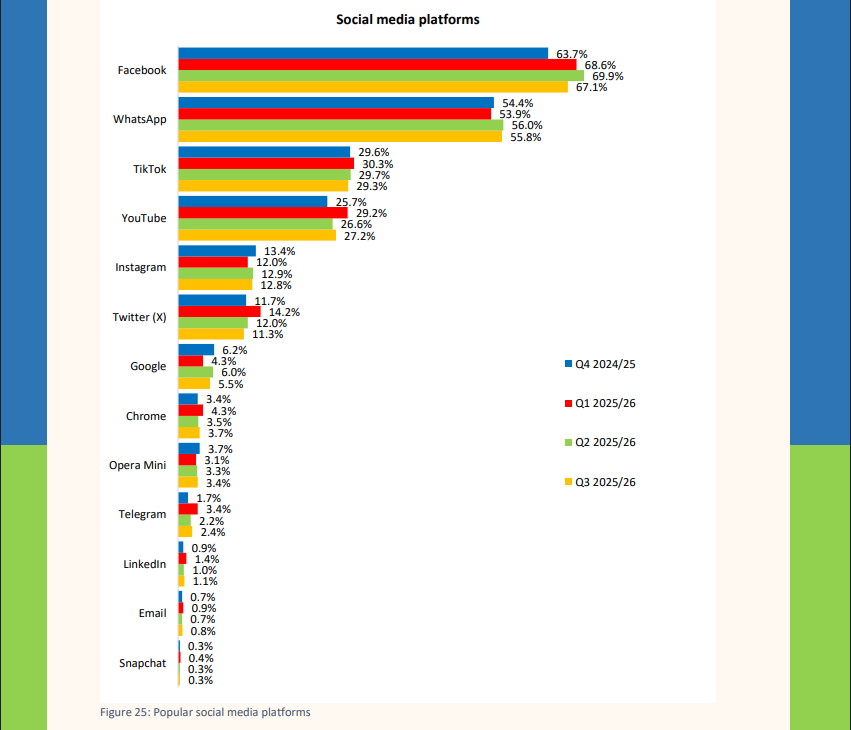
WhatsApp is no longer just where people chat with family and friends. It is where customers ask about products, schools send updates, churches coordinate members, chamas communicate, small businesses receive orders, creators build communities, and brands handle customer care. This is not surprising, given that WhatsApp ranks as Kenya’s second most-used social media platform, according to the Communications Authority of Kenya’s April 2026 Audience Measurement and Industry Trends Report. For businesses, usernames could make customer communication smoother. A customer may be more comfortable messaging a business username than saving a phone number or exposing their own number at the first interaction.
For creators, businesses and organizations, WhatsApp is also allowing eligible users to claim existing Instagram or Facebook usernames where available. This supports cross-platform consistency across Meta’s ecosystem.
What Users Gain From WhatsApp Usernames
1. Better Privacy in New Conversations
The biggest user benefit is privacy.
A username gives people another way to connect without exposing their phone number at the first point of contact. This matters in online communities, WhatsApp groups, professional networking, events, customer enquiries, training sessions and marketplace interactions.
For example, a trainer can share a WhatsApp username after a workshop instead of sharing a personal number. A freelancer can receive enquiries without exposing their direct line. A student can connect with classmates without giving out a number to everyone in a group.
This does not remove phone numbers from WhatsApp completely, but it reduces unnecessary exposure.
2. Safer Public Sharing
Many people already share WhatsApp numbers on posters, social media bios, websites, event pages, campaign material and business profiles.
That creates risk. A phone number can be copied, saved, added to spam lists, or used outside the original purpose.
A username is safer to share publicly because it is less tied to a person’s full real-world identity. This is especially useful for creators, small business owners, consultants, trainers, journalists, public-facing professionals and anyone who receives enquiries from people they do not know personally.
3. More Control Over Who Can Reach You
The optional username key is one of the most important parts of the update.
Without it, someone who knows your exact username may be able to message you. With a username key, your username alone may not be enough. The person may also need the key before they can reach you.
This gives users more control, especially when a username is shared publicly or circulates beyond the intended audience.
4. Reduced Phone Number Harvesting
WhatsApp usernames will not end spam, but they can reduce one common problem: phone number harvesting.
Today, once your number is visible in a group, poster, directory or public page, it can be copied and reused. With usernames, users can create a contact layer that does not immediately expose the number behind the account.
Scammers will adapt, but WhatsApp is removing one of the easiest ways bad actors collect personal contact details.
What Businesses and Creators Gain
1. Stronger Brand Identity
For businesses, usernames make WhatsApp more brandable.
A handle is easier to remember than a long phone number. It can be placed on websites, social media bios, ads, posters, packaging, email signatures, influencer campaigns, newsletters and customer support material.
Instead of saying “save this number,” a business can say “message us on WhatsApp at @brandname.”
That sounds simple, but it matters. Easy contact points reduce friction. In digital marketing, reduced friction can increase enquiries, conversions and customer engagement.
2. Easier Customer Entry Points
Many customers are comfortable using WhatsApp, but not everyone wants to expose their phone number to every business they interact with.
Usernames may reduce that hesitation. A customer can start a conversation with a business without feeling like they have given away too much personal information too early.
This could make WhatsApp even stronger for lead generation, bookings, product enquiries, customer service, after-sales support and social commerce.
3. Cross-Platform Consistency
A consistent handle across Instagram, Facebook, WhatsApp, LinkedIn, TikTok, X and a website domain helps customers identify the right brand. This is important because impersonation is already a major online problem. If a brand uses one name on Instagram, another on Facebook, another on WhatsApp and another on X, customers can easily get confused.
WhatsApp usernames could become part of official brand identity. For some organizations, the WhatsApp handle may soon become as important as the website domain, Instagram username or verified page.
4. Better Professional Boundaries
For founders, consultants, creators, trainers, sales teams and customer service staff, usernames can help separate personal numbers from professional communication. Many people currently use their personal phone numbers for work because WhatsApp is convenient. Over time, usernames could give professionals a cleaner way to manage public contact without exposing private numbers everywhere.
This is useful for SMEs, consultants, agencies, schools, churches, public offices, community groups and service-based businesses that already depend on WhatsApp for communication.
5. New Customer Identity Systems
There is also a technical side that businesses must not ignore.
For businesses using WhatsApp integrations, usernames affect how customers are identified in backend systems. Twilio says WhatsApp usernames introduce a Business Scoped User ID, or BSUID. When a user adopts a username, their phone number may no longer appear in some webhook payloads. Instead, the business may receive the BSUID in fields such as ExternalUserId.
This matters for businesses using CRMs, WhatsApp Business API integrations, chatbots, automation tools, helpdesks and reporting dashboards.
The simple version is this: businesses should not assume every WhatsApp customer identifier will always be a phone number. Systems may need to handle phone numbers, usernames and business-scoped IDs.
The Downsides and Risks of WhatsApp Usernames
1. User Confusion
WhatsApp’s biggest strength has always been simplicity.
You have someone’s number, you message them. That is easy to understand.
Usernames introduce another layer. Some users may not immediately understand the difference between a phone number, display name, profile name, username and username key.
This may create confusion, especially during a gradual rollout where some users have the feature and others do not.
2. Phone Numbers Are Still Required
Usernames are not a complete replacement for phone numbers.
WhatsApp users will still need a phone number to register. The feature improves privacy in some new conversations, but it does not remove the phone number from WhatsApp’s core account structure. Reuters also reported that WhatsApp said the feature was not yet live and would roll out slowly later in 2026, with phone numbers still required for registration.
This distinction matters. A username protects how you are contacted in some situations. It does not make WhatsApp completely phone-number-free.
3. Impersonation Risk
Any platform that introduces unique handles also creates competition for names. Public figures, businesses, government agencies, media houses, schools, banks, creators and organizations will need to secure official usernames early. If they do not, someone else may claim a confusingly similar name. WhatsApp has said some high-profile names, including those linked to celebrities and politicians, have already been reserved to prevent others from claiming them.
That is useful, but it does not remove the risk completely. Impersonators can still use misspellings, extra dots, underscores, abbreviations or lookalike names.
4. Username Squatting
Username reservation creates a digital land-grab moment. We are already seeing conversations online where some Kenyan users have posted about securing names linked to prominent people, while others have joked about taking up handles associated with brands. At first, it may look like harmless online banter. But it points to a real brand and reputation risk.
Usernames are digital real estate. Once people understand that a WhatsApp handle can represent a person, company, media house, public office, school, bank or creator, the race for recognizable names becomes serious.
5. Brand and Reputation Risk
For brands, the risk is not only losing a preferred username. The bigger concern is customer confusion and impersonation. A fake or confusing WhatsApp username could be used to pose as a bank, delivery company, school, government office, media brand, ecommerce store or customer care desk.That could lead to scams, fake payment instructions, personal data collection, phishing or reputational damage.
This is particularly important in markets where WhatsApp is deeply embedded in daily communication. If someone imitates a trusted name, the damage can move quickly through private chats, screenshots and groups.
6. Regulatory Concerns
The rollout has already attracted regulatory attention. Reuters reported that India asked WhatsApp to halt the username rollout in the country until consultations are complete. According to Reuters, Indian authorities raised concerns that the feature could increase online fraud, phishing and impersonation because bad actors could contact victims without revealing phone numbers. India is WhatsApp’s biggest market, with more than 500 million users. That concern is not limited to India. Any country dealing with mobile scams, phishing, fake customer support accounts and online fraud will be watching this feature closely.
The tension is clear. Users want privacy. Regulators want traceability and accountability. WhatsApp will have to prove that the feature can protect both.
7. Scammers Will Adapt
Scammers follow user behaviour. If usernames become common, fraud tactics will shift. We may see fake bank support handles, fake government service handles, fake school accounts, fake delivery support handles, fake customer care accounts and fake creator accounts. This is why businesses will need to educate customers clearly.
Just as brands tell customers not to send money to unofficial numbers, they will need to tell customers which WhatsApp username is official.
How WhatsApp Usernames Will Shape Digital Marketing
1. Messaging Will Become More Central to Customer Journeys
Social media feeds are crowded. Posts move fast. Ads are becoming more expensive. Algorithms keep changing. Messaging is different because it creates direct customer relationships. WhatsApp already plays this role for many businesses. Usernames could make the platform even more useful because customers may feel safer starting conversations without exposing their phone numbers immediately.
For marketers, this means WhatsApp should not be treated as an afterthought. It should be part of the customer journey, from awareness to enquiry, conversion, support and retention.
2. Handles Will Become Trust Signals
A WhatsApp username may soon become part of a brand’s trust infrastructure.
Customers will ask: Is this the real handle? Is this the official account? Is this the same name used on Instagram, Facebook, LinkedIn or the company website?
That means brand monitoring will need to go beyond social media pages. Businesses will also need to watch for username squatting, impersonation attempts, fake support accounts and confusing variations.
3. Brand Protection Will Become More Urgent
Many organizations are reactive when it comes to digital identity. They wait until there is a fake account, scam page or public complaint before acting. WhatsApp usernames should change that mindset. Brands should reserve official handles early, communicate them clearly and monitor lookalike names. This is especially important for banks, schools, media houses, public institutions, ecommerce brands, hospitals, churches, political actors and service businesses.
4. Customer Data Systems Will Need to Evolve
For businesses using WhatsApp at scale, customer identity will become more complex. It will no longer be enough to think only in terms of phone numbers. Businesses may need to track usernames, phone numbers, BSUIDs, CRM records, consent, customer history and support interactions.
This is especially important for brands using WhatsApp Business API, chatbots, CRMs, automated responses, lead management systems and customer support dashboards.
5. Content and Conversion Strategies Will Change
When brands promote WhatsApp usernames, calls to action will become simpler. Instead of asking users to save a number, click a long link or fill a form, brands can direct them to a memorable WhatsApp handle. This could improve conversion in campaigns, especially for service businesses, ecommerce, events, education, training, real estate, health services and customer support.
For example:
“Message @brandname on WhatsApp to book a consultation.”
“Need help choosing the right package? Chat with us on WhatsApp at @brandname.”
“Join the class updates through our official WhatsApp username @brandname.”
This creates a cleaner bridge between social media content and private customer conversations.
What Businesses Should Do Now
1. Reserve Your Official Username Early
Businesses, creators, public institutions, media houses, schools, banks, agencies and high-profile individuals should reserve their preferred WhatsApp usernames as soon as the feature becomes available.Where possible, the username should match existing handles on Instagram, Facebook, LinkedIn, TikTok, X and the brand’s website domain.
This is not a small admin task. It is brand protection.
2. Audit Your WhatsApp Presence
Organizations should check how they currently use WhatsApp. For instance, do you use one number or multiple numbers? Do you use the WhatsApp Business App or WhatsApp Business Platform? Do you have CRM integrations, bots, customer support tools or automation workflows? Or do customers know which number is official? This audit will help businesses prepare for usernames and avoid confusion later.
3. Update Customer Communication
Once your username is active, communicate it clearly. Add it to your website, social media bios, customer service scripts, email signatures, posters, packaging, ads, booking pages, newsletters and support materials. Do not assume customers will automatically know your official handle.
4. Train Customer-Facing Teams
Sales, marketing, community and customer support teams should understand how WhatsApp usernames work. They should know what customers will see, how to explain the feature, how to handle confusion, and how to report fake accounts or suspicious activity. This is especially important for businesses that deal with payments, personal data, bookings, deliveries or sensitive customer information.
5. Monitor Impersonation
Brands should monitor for fake or confusing variations of their names. This is important for banks, schools, media houses, public institutions, creators, agencies, e-commerce brands, hospitals, churches, political actors and service businesses.
A fake handle can damage trust quickly, especially on a platform where conversations are private and screenshots can move fast.
6. Prepare Your Systems
Businesses using WhatsApp APIs, CRM systems, chatbots or helpdesk tools should check whether their systems are ready for BSUIDs and username-based interactions.
If your system assumes every WhatsApp customer must be identified by a phone number, this is the time to review that setup.
What This Means for Brands in Kenya
For Kenyan businesses, this update matters because WhatsApp is already deeply woven into how customers communicate. People use WhatsApp for customer care, product enquiries, school updates, chama coordination, church groups, delivery communication, event planning, community mobilization and business transactions.
That makes WhatsApp usernames more than a privacy update. They are likely to influence how Kenyan brands manage visibility, trust, customer conversations and reputation. A business that secures a clear WhatsApp username early will have an advantage. It will be easier to promote, easier to remember and easier to verify.
A business that waits may face confusion, missed usernames or impersonation risks.
Final Thoughts
WhatsApp usernames are not just another app update.
They represent a shift in how people and businesses connect on one of the world’s most important communication platforms. The phone number will still matter, but it will no longer be the only way to start a conversation.
For users, this means more privacy and control, while for businesses, it means stronger branding, smoother customer entry points and a need to protect official handles.
On the other hand, for marketers, it means WhatsApp should be treated as part of the customer journey, not just a chat app. For scammers, it creates new tactics, which means brands and users must stay alert.
Meta is trying to solve a real user problem without turning WhatsApp into a public social network. Whether it succeeds will depend on how well the rollout handles safety, impersonation, user education and business readiness.
For now, one thing is clear: WhatsApp identity is changing.
Any brand, creator, public institution or marketer that uses WhatsApp should start preparing early. At Samodigital Agency, our advice is simple: secure your brand identity, update your customer communication, monitor for impersonation, and make WhatsApp part of a wider digital marketing and customer experience strategy. The next phase of digital marketing will not only happen on public feeds. It will also happen in private conversations, trusted handles and direct customer relationships.


